
Wings of Wonder: The Hummingbird, Mockingbird, Hawk, and Black Duck – A Journey Through Nature and Myth
Introduction: The Symphony of Feathers
From the smallest, most delicate flutter of a hummingbird’s wing to the piercing gaze of a hawk soaring high above the earth, birds have long enchanted the human spirit. They are messengers of the gods, symbols of freedom, omens, and muses. Among these avian marvels, the hummingbird, mockingbird, hawk, and black duck each hold a unique place in both natural history and human imagination. Let us traverse their origins, lives, and legends, and perhaps, like them, touch the heavens.
The Hummingbird: Jewels of the Air
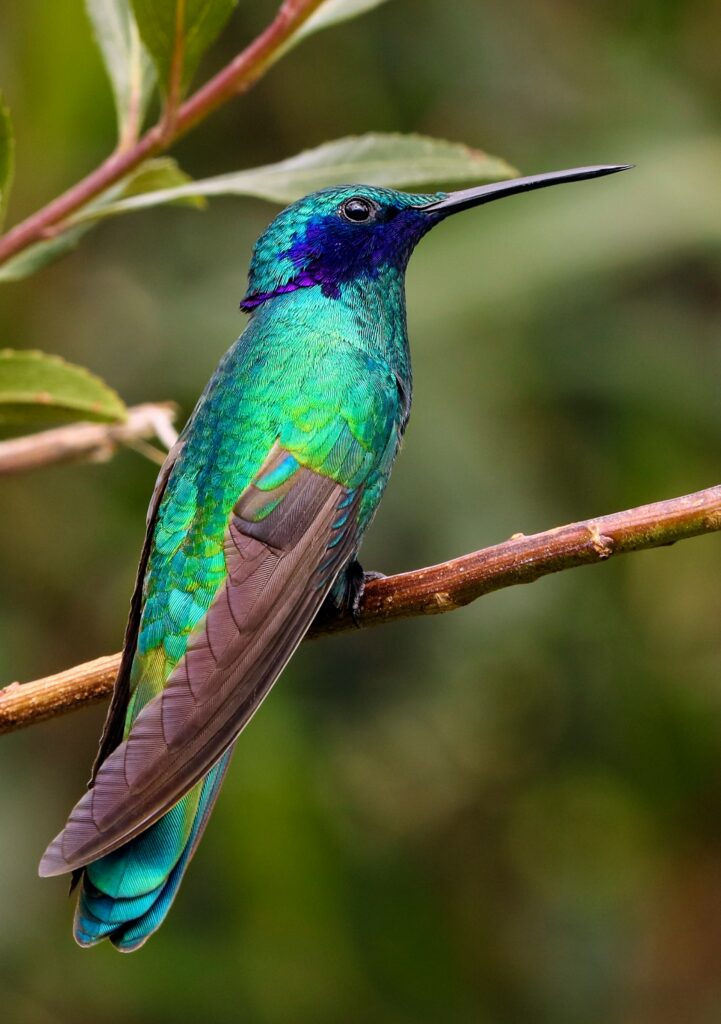
Origins and Evolution
The hummingbird, that dazzling dart of color, is a creature native to the Americas. With over 300 species, it is believed that hummingbirds evolved about 22 million years ago in South America, where flowers and birds began their exquisite dance of co-evolution. Their tiny bodies, shimmering like living gems, adapted perfectly to nectar feeding, with long, slender bills and tongues that flicker like flames inside blossoms.
Birth and Early Life
A hummingbird’s birth is as fragile as a dream.The female hummingbird, working alone, constructs a tiny, walnut-sized nest, skillfully concealing it beneath a quilt of lichen and strands of spider silk. Inside this tiny sanctuary, she gently places two eggs no bigger than peas. When the chicks emerge, they are blind and fragile, their skin so thin it seems to glow with the light behind it.For two to three weeks, the mother tirelessly feeds them regurgitated nectar and insects, until they fledge, ready to test their wings.
How They Live and Feed
Hummingbirds are masters of flight, able to hover, fly backward, and even upside down. Their wings beat up to 80 times per second, creating the characteristic hum that gives them their name. They consume up to half their body weight in sugar daily, visiting hundreds of flowers and, in doing so, act as vital pollinators. Yet, they also eat tiny insects and spiders, essential sources of protein.
Legends and Symbolism
To the Aztecs, the hummingbird was a jeweled spirit — warriors reborn as tiny guardians, sipping the blossoms of paradise in endless flight.Across Native American traditions, these small birds are cherished as symbols of joy, strength in the face of hardship, and gentle messengers moving between this world and the spirit realm. The Taino people believed the hummingbird was created from the soul of a warrior who refused to die, his heart beating forever in miniature form.
The Mockingbird: The Voice of Many
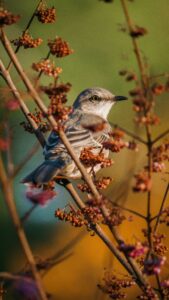
Origins and Evolution
Mockingbirds are native to North and South America, with the most famous species, the Northern Mockingbird (Mimus polyglottos), inhabiting the United States, Mexico, and the Caribbean. The mockingbird’s lineage stretches back millions of years, related to thrashers and catbirds. It evolved its extraordinary vocal abilities to defend territory and attract mates, mastering a repertoire that can include over 200 different songs.
Birth and Early Life
The mockingbird typically crafts its nest low among bushes or tree branches, shaping it into an open cradle woven from twigs, grass, and other gathered bits.The female lays 3-5 pale blue or greenish eggs, speckled with brown. Both parents fiercely defend the nest, sometimes diving at intruders, including humans. The chicks fledge after about two weeks, but the parents continue to feed and teach them.
How They Live and Sing
Mockingbirds are renowned mimics, weaving the calls of other birds, frogs, and even mechanical sounds into their own songs. Males sing most vigorously during breeding season, their voices filling the night air. They eat insects, berries, and fruits, adapting readily to urban environments. Ever bold, they defend their territory from cats, hawks, and anything that threatens their home.
Mockingbird in Myth and Literature
In Cherokee lore, the mockingbird was the guardian of truth, teaching humans to discern sincerity from deception. The mockingbird’s song was said to carry the voices of the ancestors, a reminder to listen closely to the world around us.In contemporary storytelling, Harper Lee’s To Kill a Mockingbird elevated the bird as an emblem of purity harmed by injustice, reminding us through its pages that “harming a mockingbird is a sin.”
The Hawk: The Sky’s Silent Hunter
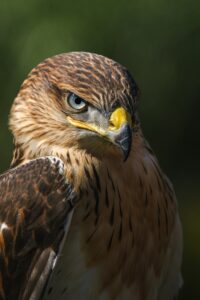
Origins and Evolution
Descendants of sky lords from the Paleogene dawn, over 50 million years ago, hawks of the Accipitridae kinship glide and hunt across the globe, sparing only the silent snows of Antarctica.Their keen eyesight, often said to be eight times sharper than a human’s, and their hooked beaks and powerful talons, have made them supreme hunters of the skies.
Birth and Early Life
Hawks typically build their nests high in trees or on cliffs, lining them with soft materials. The female lays 1-5 eggs, which both parents guard with vigilance. The young hatch covered in down, dependent on their parents for food. From their first clumsy flaps to their first kill, the young hawks are taught the art of the hunt.
How They Hunt and Live
Hawks hunt with grace and precision. Whether gliding silently over fields or diving at breathtaking speed, they prey upon rodents, birds, reptiles, and insects.A common sight across North America, the Red-tailed Hawk can spy a mouse from heights beyond a hundred feet. These majestic birds are vigilant protectors of their realm, often seen soaring on the breeze, wide circles over their realm, their call a haunting, razor-sharp cry that both stirs awe and sends a shiver down the spine.
Hawks in Myth and Culture
To the Egyptians, the hawk was sacred to Horus, the sky god, a protector of the pharaohsIn the sagas of Norse memory, a sharp-eyed hawk was said to perch between the brows of a vast, nameless eagle who ruled the heights of Yggdrasil, the world tree, watching as fate’s threads entwined. Across the traditions of many Native peoples, the hawk soars as a messenger between realms, a seer’s guide whose feathers crown the brave and whose form carved in sacred wood speaks of power, clarity, and the wisdom of the skies.
The Black Duck: The Shy Waterfowl
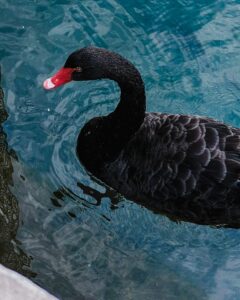
Origins and Evolution
Emerging in the eastern reaches of North America, the American Black Duck (Anas rubripes) stands as a close relative of the familiar mallard.Fossil evidence places their ancestors in the Miocene epoch, some 5-20 million years ago. Unlike their flamboyant cousins, black ducks wear cloaks of dusky brown, blending into the marshes and estuaries they call home.
Birth and Early Life
In spring, the female builds a hidden nest on the ground, lining it with down plucked from her breast. She lays 6-14 eggs, pale green or buff, and tends them alone. The downy ducklings hatch precocious and ready, following their mother to water within a day. In that place, they master the arts of foraging and escaping the jaws of predators.
How They Live and Feed
Dabbling in quiet wetlands, black ducks tip forward in the shallows to dine on aquatic vegetation, seeds, insects, and crustaceans.They are wary and secretive, often feeding at dawn and dusk to avoid hunters and predators. In winter, they gather in flocks along the Atlantic coast, their quiet presence a stark contrast to the more gregarious mallards.
Black Duck in Lore
Though lacking the mythic grandeur of hawks or hummingbirds, the black duck features in regional folklore. In the Algonquin tradition, ducks were the first beings to call forth the land from beneath the primordial sea. Hunters have long admired the black duck’s cunning, and its silhouette against the marsh twilight is a symbol of the untamed wild.
A Final Soaring Thought
The hummingbird’s furious joy, the mockingbird’s borrowed music, the hawk’s fierce gaze, and the black duck’s quiet dignity — each embodies a different thread of the natural world’s tapestry. In myth, in life, in the skies and waters, they remind us of what it means to live wild and free, to sing, to hunt, to hide, to survive.
So the next time you hear a mockingbird’s chorus at dusk, or see the shimmer of a hummingbird at dawn, or spot a hawk wheeling high, or glimpse the shadow of a black duck upon still waters — pause, My Liege. Listen, watch, and wonder. For in these winged creatures, ancient stories whisper, and nature’s poetry unfolds.


